The Best Creative Agencies to Know in 2026
Discover the 12 best creative agencies in 2026, from global players to boutique studios. Explore their work, what makes them great, and find the right fit for your brand.
Typography is rarely the problem people think they have.
They’ll say the website feels inconsistent.
That campaigns don’t quite look “on brand.”
That social posts, decks, landing pages and ads all feel like they came from different companies.
Nine times out of ten, the issue isn’t taste.
It’s the absence of a typography system.
Good typography doesn’t just look nice.
It creates rhythm, hierarchy, and clarity, especially when brands start moving faster and publishing more.
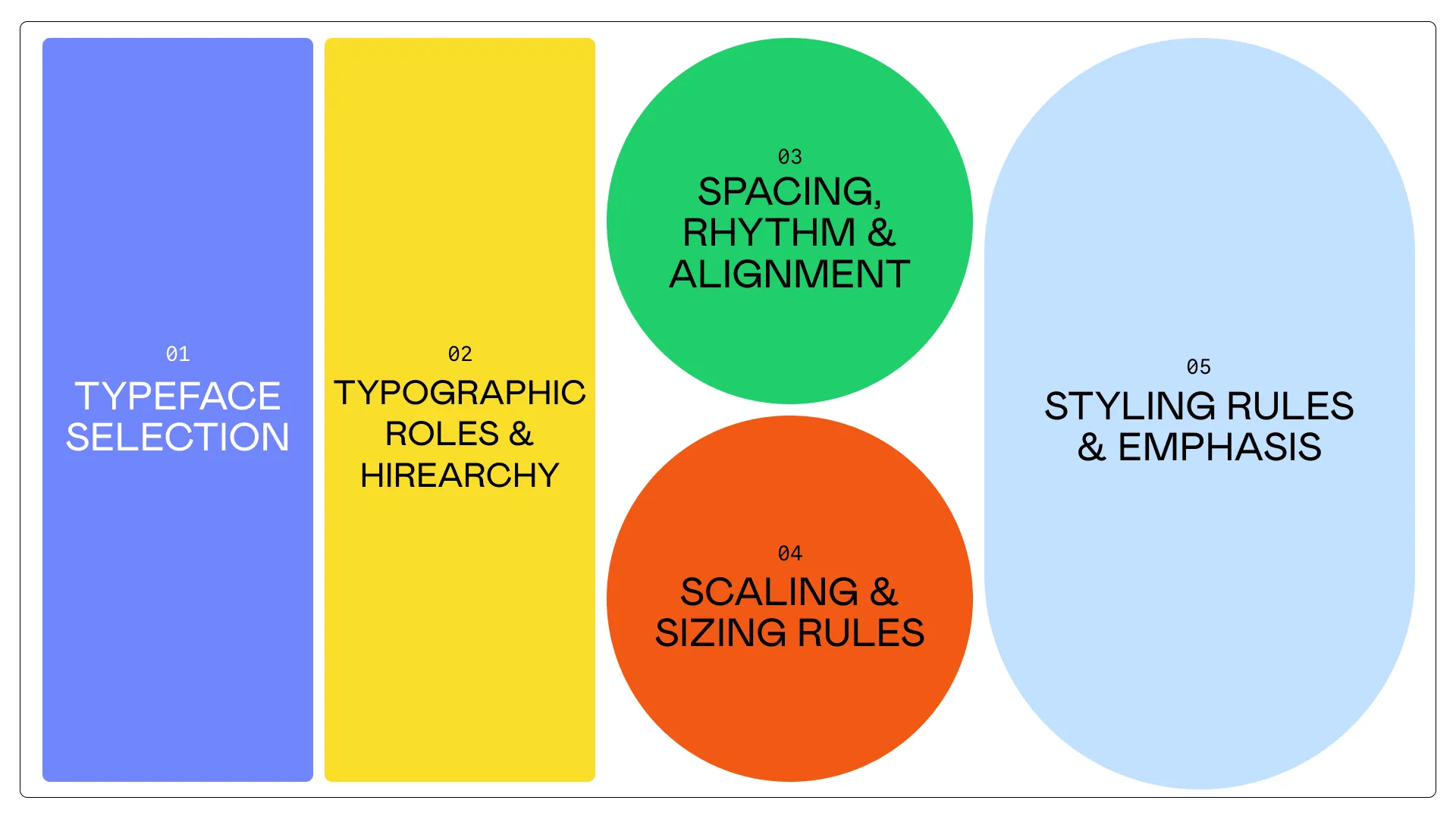
This guide breaks down what a typography system actually is, what goes into one, and how it supports scalable brand, design, and campaign work. We’ve also mapped it visually, so it’s easy to understand at a glance.
A typography system is a structured set of rules that governs how type is used across a brand—across platforms, formats, and teams.
It goes far beyond “these are our fonts.”
A proper typography system defines:
In short: it turns fonts into a framework.
Choosing a font is easy.
Building a system is what stops things falling apart later.
Font choice = what typefaces you use
Typography system = how those typefaces behave in the real world
Without a system:
With a system:
Below is a structured breakdown of the elements that make up a scalable typography system—organised from strategic decisions through to practical application.
This is where most brands start, and often stop. But it’s only the foundation.
Includes:
Good systems prioritise usability as much as personality.
This is where type starts doing real work.
Includes:
Clear hierarchy ensures content is scannable, readable, and consistent, whether it’s a website, ad, or presentation deck.
Consistency doesn’t come from “eyeballing it.”
Includes:
This layer ensures typography holds together across screen sizes and formats without constant manual tweaking.
This is the invisible glue.
Includes:
When this layer is right, layouts feel calm and intentional, even before colour or imagery are applied.
This is where expression lives, but with guardrails.
Includes:
Strong systems define how to add emphasis without visual chaos.
This is where typography systems earn their keep.
Includes:
The goal isn’t identical layouts everywhere, it’s recognisable structure everywhere.
Typography is one of the first things to break when brands grow.
A typography system:
It’s one of the highest-leverage investments a growing brand can make.
Typography systems are especially valuable if:
In other words: most growing brands.
Typography systems sit at the intersection of strategy and execution, which is why they’re a core part of how we work as a creative agency.
They often form part of:
Different outputs. Same system thinking underneath.
Typography is brand behaviour.
Typography isn’t decoration.
It’s how a brand behaves on the page.
A system doesn’t limit creativity, it removes friction so good ideas can move faster.


